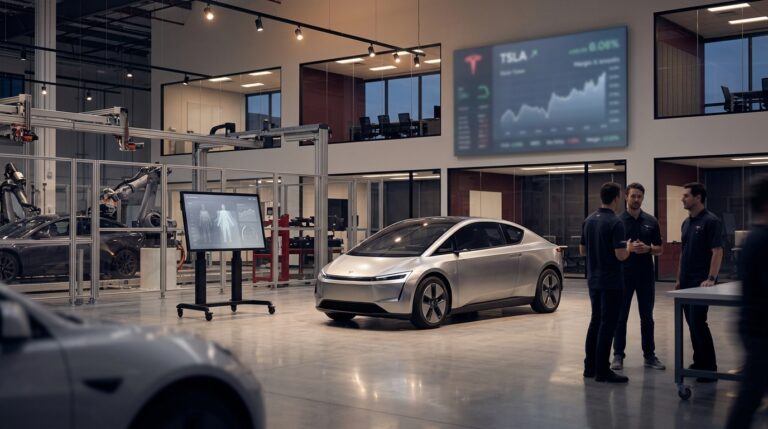
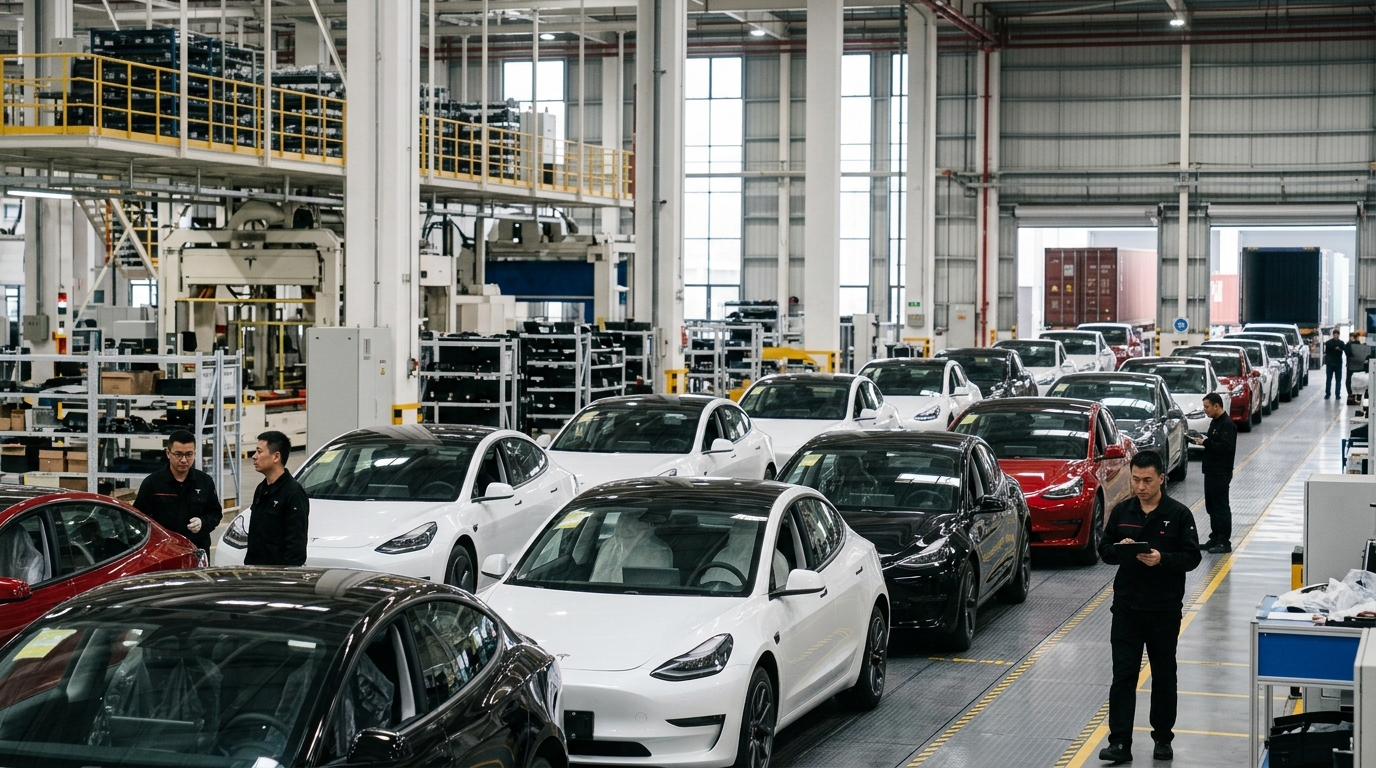
Here’s the thing about Tesla right now: the headline number is already public, and the stock still sold off about 7% the day it landed.
480,126 vehicles delivered in Q2. That’s against a Wall Street consensus around 406,000. A 25% jump year over year. A 34% sequential surge. By any reasonable standard, a blowout.
And shares fell anyway.
That tells you something important about where the real debate lives heading into July 22.
Why Volume Doesn’t Tell the Whole Story
The delivery numbers are in. Consensus for Q2 is roughly $25.6 billion in revenue, depending on the tracker. The easy part of the earnings argument is already priced in.
What isn’t priced in — and what will actually move this stock — is automotive gross margin. The fear on the Street isn’t that Tesla didn’t deliver cars. It’s that they delivered those cars at deeply discounted prices, and the margin structure underneath is still fragile.
Slight tangent, but it matters: the energy storage segment quietly deployed 13.5 gigawatt-hours in Q2. That’s becoming a real business. The market barely talked about it. Management probably will on July 22, and it could be a meaningful buffer to the automotive margin conversation.
What Else the Market Is Watching
- Cybercab: Engineering tests of a production Cybercab have begun on public roads in Austin. Robotaxi has expanded to Dallas, Houston, and Miami. Management will need to say something substantive about the commercial rollout timeline or the stock could give back gains.
- Optimus: Starter production is targeted for late July or August. A second factory line at Giga Texas has been discussed as a next step. This is the long-duration bull case — but it burns cash today.
- FSD subscribers: Tesla reported approximately 1.28 million active FSD subscriptions as of Q1 2026, up 51% year over year. That matters for recurring software revenue.
- Capital expenditure: Tesla has said 2026 capex will exceed $25 billion. Free cash flow is getting compressed. Investors want to know when the inflection comes.
The Tension Nobody Is Resolving
Tesla’s valuation hinges less on what it earned last quarter and more on whether investors believe it can successfully transition into an AI and robotics platform. That’s the honest version of what’s happening here.
The bull case is Cybercab scaling across dozens of cities, Optimus entering commercial deployment, and FSD reaching a level of reliability that finally unlocks autonomous revenue. The bear case is that all three of those bets require years of capital and keep burning cash while the core EV business fights for margin against Chinese competitors who don’t have the same cost structure.
Tesla rarely trades sideways after earnings. The street-level base case puts the stock in a $365 to $455 range through July. That’s a $90 band on a company priced for a very specific future.
Technical Snapshot
TSLA is currently trading near $408. A confirmed move above $428.60 is required to target the next range at $438. The $395 zone is the key support level to watch if the earnings reaction turns negative. A miss on margins — even with solid revenue — could break that floor quickly.
The Bottom Line
July 22 isn’t about deliveries. Everyone already knows that story. What Wall Street is actually deciding on July 22 is whether Tesla’s AI and robotics ambitions justify a valuation that still has the stock priced for dominance in businesses it hasn’t fully launched yet. Gross margins and Cybercab commentary will determine whether this is a re-rating event or just another miss dressed up in a big delivery number.
For informational purposes only.