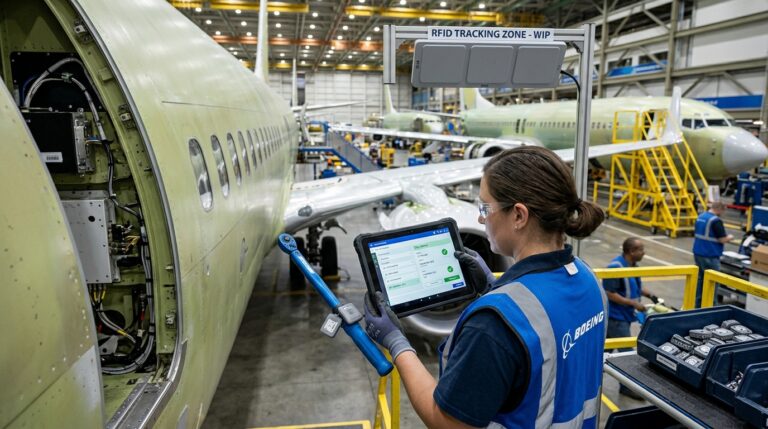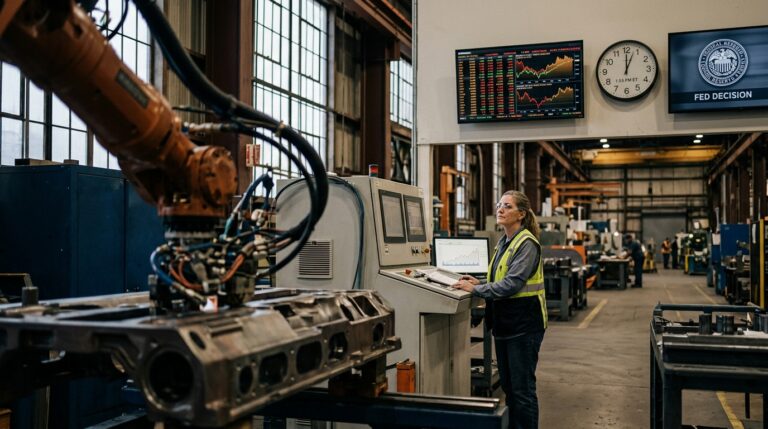

Holtec Nuclear was supposed to price this week. Instead, the company announced Wednesday, September 16, 2026 that it was suspending its planned U.S. IPO, citing market conditions, leaving investors who spent two weeks studying the deal with a question worth answering: does that change the investment case?
It shouldn’t, not fundamentally. What HNUC was bringing to market is structurally different from the nuclear stocks that have already gone public this year, and the postponement actually illustrates why.
Why This Stock Matters Now
The postponement came amid heightened investor interest in nuclear power as data centers drive electricity demand, but recently listed nuclear companies have struggled. Standard Nuclear has traded below its IPO price for stretches since its July 2026 debut, and X-Energy has also traded below its April 2026 offering price. Holtec looked at those charts and stepped back. That is a rational decision, not a sign of business weakness.
The Federal Reserve raised its target rate by 25 basis points to 3.75% to 4.00% on September 16, 2026, marking its first hike since 2023, with policymakers noting that inflation remains elevated. The Fed also signaled the possibility of another hike later this year. Pricing an IPO into that environment, on a quad-witching Friday no less, would have been asking for trouble even for a strong deal.
The Investment Thesis
Holtec is unusual among newly public nuclear names because it has meaningful operating revenue. In its IPO filing, Holtec reported $576.6 million of revenue for the year ended December 31, 2025, and $269.9 million for the six months ended June 30, 2026. That is not a projection or a development-stage estimate. It is money the company has collected servicing reactors, storing spent fuel, and decommissioning plants. Holtec makes steel and concrete casks used to store nuclear waste and is a major U.S. player in decommissioning shuttered reactors, including Indian Point north of New York City.
X-Energy raised roughly $1.1 billion when it went public in April 2026. That is a pre-revenue development company. Holtec is not.
The Business Behind the Stock
Founded in 1986 by Krishna Singh, Holtec reported 203 granted patents worldwide as of June 30, 2026, operates three U.S.-based manufacturing facilities, and has provided products and services to more than 150 nuclear reactors worldwide. That installed base is a durable revenue engine independent of anything that happens at Palisades or in the SMR program.
Palisades is the growth story. Holtec is working to return the Palisades nuclear plant to operation after it permanently ceased operations in May 2022, in what the Nuclear Regulatory Commission has described as a first-of-a-kind restart effort for a shuttered U.S. plant. In September 2024, the Department of Energy announced the closing of a $1.52 billion loan to help finance the restoration, facilitated through its Loan Programs Office under the Energy Infrastructure Reinvestment program.
Beyond the restart, Holtec has developed the SMR-300, a Generation III+ pressurized water small modular reactor, and is pursuing a dual-unit installation at the Palisades site called Pioneer One and Pioneer Two, with Hyundai Engineering & Construction as a partner. What is clearly disclosed in the IPO filing is a $300 million grant from the State of Michigan tied to the Palisades restart, alongside the DOE loan; the draft’s claim of a separate $400 million federal payment for the two SMR units is not supported in the company’s public filing and has been removed.
What’s Changing
The Palisades restart timeline has slipped. Holtec’s IPO filing describes the company targeting a restart in 2026, ahead of its commitment date with its power counterparties of March 2027, rather than confirming that earlier restart targets were met. That March 2027 date matters because Holtec has power purchase agreements with Wolverine Power Cooperative and Hoosier Energy, and the filing describes termination rights and penalties tied to missing that in-service timing.
On the SMR side, the IPO filing frames Pioneer One and Pioneer Two as pre-construction and targets first commercial operation in the early 2030s. These are milestones, not achievements, and the distinction matters.
The Risks
Three stand out. First, execution. The restart is still a complex, first-of-a-kind regulatory and engineering effort, and any further delay compresses the window before the March 2027 power commitment. Second, governance. Public investors will have limited influence over Holtec’s governance because Holtec Holdings will own all of the company’s Class B shares after the offering, and the Class B structure is designed to keep voting control with Holtec Holdings for the near future. Third, the rate environment. Higher-for-longer rates raise the cost of the capital-intensive SMR construction program, which will depend on financing and additional capital beyond what is already committed.
The peer-stock performance is a warning, not a verdict. With small modular reactors still not commercially available in the U.S., some nuclear stocks have pulled back as investors await development progress. Holtec is less exposed to that dynamic than X-Energy or Standard Nuclear because its core business generates real cash today. But the market is not yet willing to price that distinction generously.
What Investors Should Watch Next
Three things will determine whether HNUC prices successfully when it re-engages the market. Watch for a firm Palisades grid-synchronization date from Holtec’s operating team. Watch whether X-Energy and Standard Nuclear stabilize or continue to deteriorate, since that aftermarket performance is directly influencing where institutions will bid HNUC. And watch the Fed. The September 16, 2026 decision took the target range to 3.75% to 4.00% and the Fed signaled the possibility of at least one more hike later this year, which would make capital-intensive energy infrastructure a harder sell heading into year-end.
Bottom Line
Holtec pulled the right move by not forcing a pricing into a rate-hike day with two nuclear comps bleeding out. The underlying company, a substantial existing revenue base disclosed in its IPO filing, a DOE-backed restart that is a first-of-a-kind U.S. effort, and an SMR program that remains early and financing-dependent, is worth more scrutiny than the pulled deal suggests. The question is not whether HNUC deserves a public market. It does. The question is what price that market is willing to pay once conditions stabilize. That window likely reopens in the fourth quarter. Investors should be ready.