When every color and storage tier of a new iPhone sits on shelves on launch day, the instinct is to call it a supply story. This time it is a demand story, and the difference will show up in Apple’s December-quarter results.
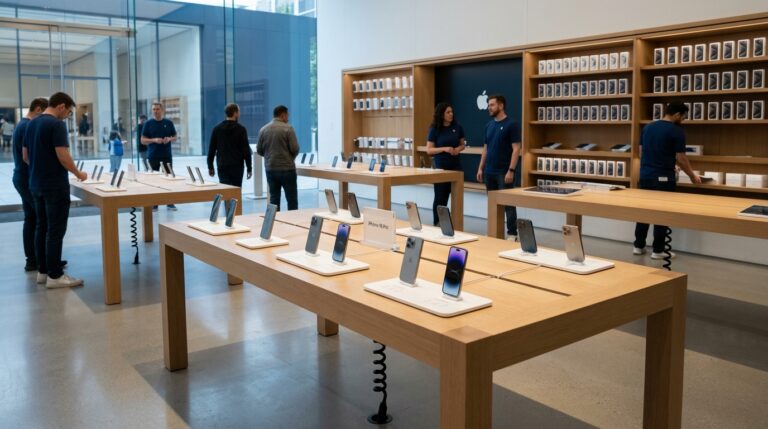
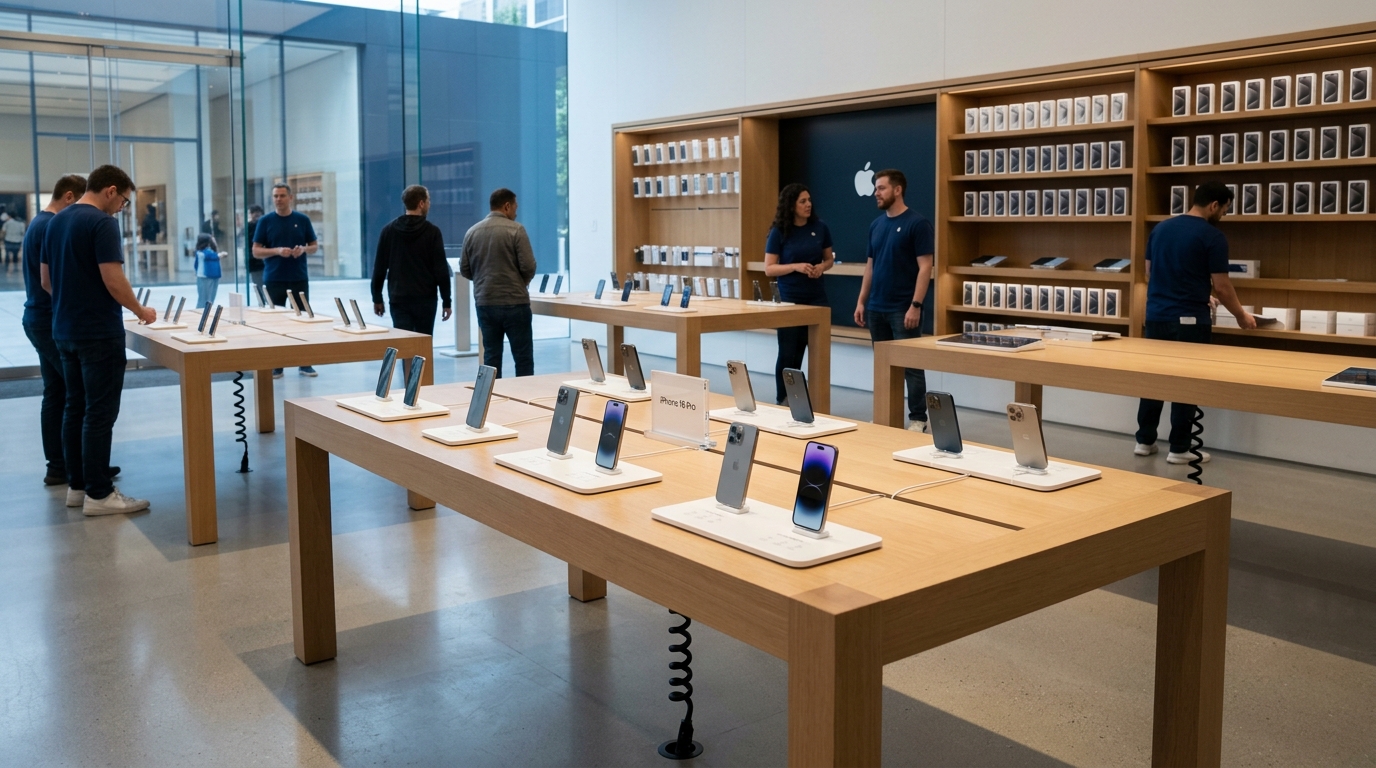
iPhone 18 Pro and iPhone 18 Pro Max went on sale in stores and online worldwide this morning, Friday, September 18. In-store pickup for the smaller iPhone 18 Pro is available from September 18 for many storage tiers and color combinations. That breadth of same-day availability, one week after pre-orders opened, is not a sign of Apple’s logistical precision. It is a signal that buyers are not racing each other to the checkout.
Why This Launch Reads Differently
Pre-orders did not sell out immediately, as is more normally the case. But the claim that by 8:30 a.m. ET on September 12 no color or configuration of the iPhone 18 Pro showed any shipping delays in the US at all is not supported by the public availability and shipping trackers that morning, which showed some configurations moving off the September 18 delivery window within hours. Compare that to the iPhone 17 Pro Max a year ago, when shipment times slipped by three to four weeks for some configurations soon after pre-orders opened.
GF Securities analyst Jeff Pu described initial wait times as “lukewarm” and has since trimmed production estimates. He attributes the softer-than-expected demand to limited spec upgrades and higher pricing: the iPhone 18 Pro starts at $1,199 in the US and the Pro Max at $1,299, with 2TB configurations reaching $2,399 and $2,499 respectively. JPMorgan analysts led by Samik Chatterjee found global home delivery averaging just seven days for the Pro and 19 days for the Pro Max, against 15 and 24 days for the equivalent iPhone 17 models a year earlier.
The Quarter Riding on the Pro
This is where Apple’s launch calendar decision compounds the demand question. Apple is widely expected to split the iPhone 18 lineup across two seasons. The iPhone 18 Pro and iPhone 18 Pro Max debut in September 2026, while the standard iPhone 18 is expected to arrive in spring 2027. This shift rewires the December quarter. In past cycles, the base model carried volume and the Pro models carried margin. This year, the Pro models carry both. Average selling price replaces unit count as the main growth engine.
Apple enters this cycle with fiscal Q3 revenue up 16% and iPhone revenue rising 22% year over year, so the baseline is not the problem. The problem is that a premium-only autumn removes the safety valve. Higher entry prices narrow the pool of buyers ready to move in one quarter, and a premium-only lineup removes the cheaper option that usually catches hesitant upgraders.
The Bull and Bear Cases
Bulls have a credible counter. Chatterjee wrote that consumers are probably holding out for the foldable iPhone Duo, with that device’s pre-orders opening October 16. If deferred demand snaps back through the Duo, the December quarter could still accelerate. Morgan Stanley has suggested the foldable could generate around $14 billion in December-quarter revenue on its own.
The bear case is more immediate. Pu expects the iPhone Duo to cannibalize some Pro Max buyers rather than add incremental volume. He has also lowered his combined iPhone 18 Pro and Pro Max production estimate to 72 million units, citing constraints from the new variable-aperture camera system. A premium lineup with constrained supply and soft pre-order velocity is a difficult combination heading into the holidays.
What Investors Should Watch
Traders watching the iPhone 18 launch cycle will keep parsing shipping and in-store availability data over coming weeks, since in-store pickup availability remaining robust across many configurations leaves open whether that translates into a stronger December quarter than last year’s. The metric to track is not launch-day lines but how fast in-store inventory depletes over the next two to three weeks.
Apple still derives the largest portion of its revenue from smartphone sales: in the fiscal third quarter ending June 27, iPhone revenue was $54.252 billion out of $109.4 billion in total revenue. With the base model expected to be absent until spring, the Pro’s performance this quarter is not one variable among many. It is the variable.