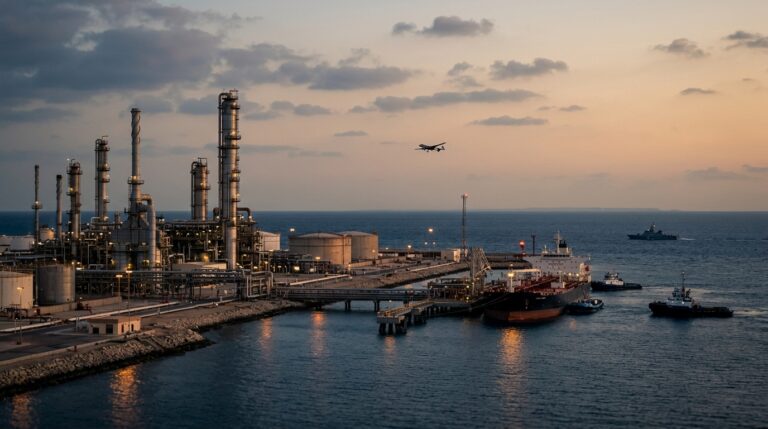
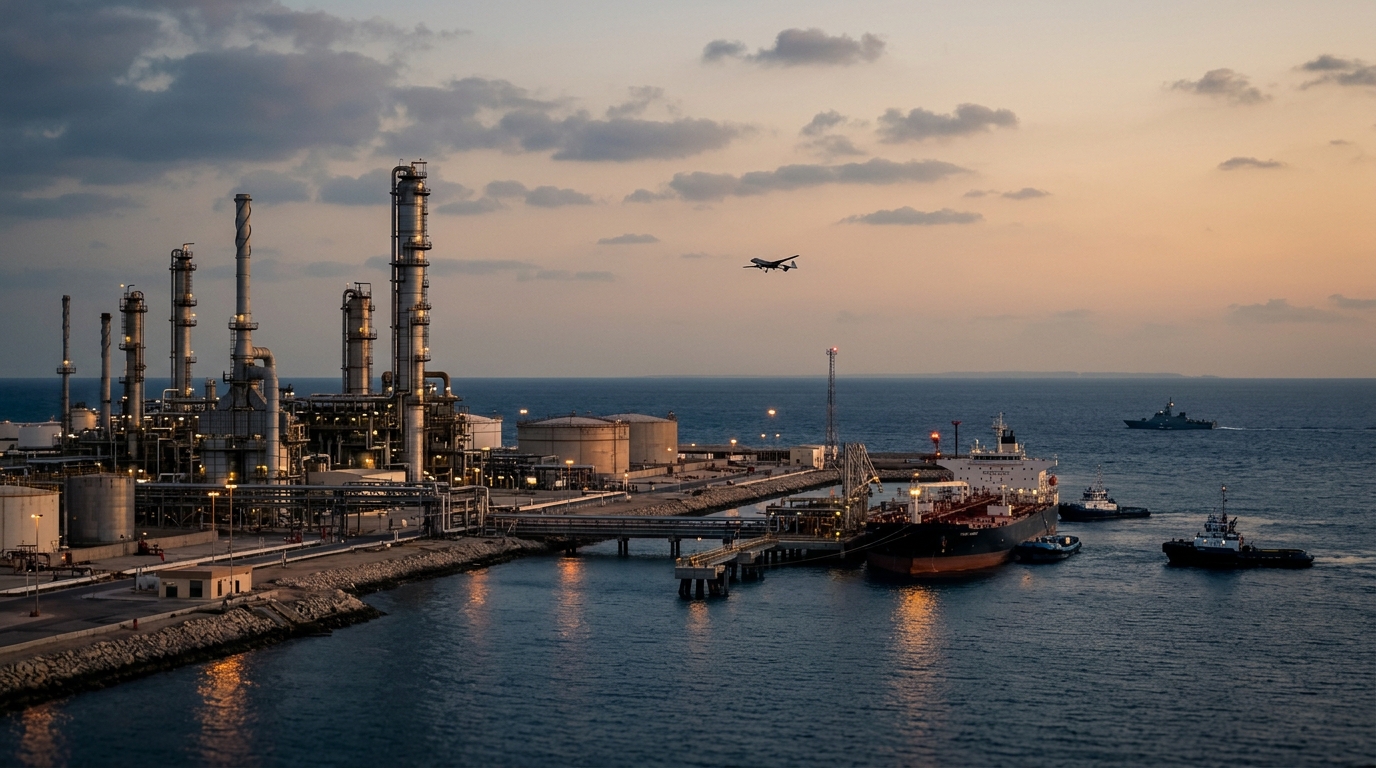
Brent settled at $94.61 on Wednesday, up 3.5% on the session, after Yemen’s Houthis claimed a strike on Saudi Arabia’s Ras Tanura refinery, a 550,000-barrel-per-day complex. WTI rose 2% to $83.68. By early Thursday Asian trade, Brent had extended to about $94.71, with multiple outlets reporting additional disruption risk around the Strait of Hormuz after recent mine incidents.
Saudi air defenses said they destroyed four drones over the site. The refinery’s condition remains unconfirmed, but the market didn’t wait for a damage report. The fear premium arrived immediately.
What the Curve Is Actually Saying
The headline price matters less right now than what the curve is doing. The Jan–Dec 2027 Brent spread has widened sharply, consistent with acute tightness in seaborne grades. Long-dated contracts, by contrast, remain far lower than prompt pricing, reflecting the market’s embedded view that supply eventually normalizes. Front-month buyers are paying an enormous premium to own barrels now. That is the real signal.
Steep backwardation of this magnitude tends to reward holders of near-term exposure and punish outright longs further down the curve. For traders sizing energy positions into a four-day holiday weekend, the structure argues against reaching for deferred contracts at current levels. The edge, if any exists, sits at the front.
Three Binary Events Before Monday’s Open
Between now and the January Brent contract expiry Monday, three things can shift the market decisively. First, OPEC+ ministers convene Sunday, with internal quota and compliance debates still in focus. A fractious meeting that signals quota relaxation or compliance slippage would likely drag Brent toward the high $80s. A unified decision to maintain discipline keeps the front supported in the mid-$90s.
Second, Hormuz. Shipping through the strait has been volatile as mine incidents and security alerts continue to disrupt routing and confidence. Third, Omani mediation has reportedly pulled Saudi Arabia back from targeting Hodeidah port, suggesting a diplomatic ceiling on retaliation. If that ceiling holds, the spike in risk premium has limited room to compound further.
How to Position
Energy ETFs like XLE or broad commodity vehicles are blunt instruments here. What the curve structure rewards is exposure that captures the near-term risk premium without being long duration into 2027, which some forecasters still expect to loosen versus current tightness. Traders comfortable with energy beta should concentrate it at the prompt end and treat any rally beyond $97 as a zone to reduce rather than add.
The bears have a credible case too. Prices fell sharply in the weeks before this week’s rebound. The market was already leaning toward a surplus story before the Houthis changed the conversation.
Action Plan
Watch Sunday’s OPEC+ outcome before adding new long exposure. A quota agreement that disappoints bulls, or a Hormuz de-escalation signal, would unwind the risk premium quickly. Keep position sizes modest enough to survive a gap lower on Monday’s open. The opportunity here is real, but so is the gap risk of holding through three days of potential headlines with no liquid market to exit through.