At its peak last October, Constellation Energy traded above $412. Today it’s around $258. That’s about a 38% haircut on a company that just posted one of the strongest quarters in its history.
Something doesn’t add up. And that gap is exactly where the opportunity might be sitting.
The AI Power Problem Is Getting Bigger, Not Smaller
Here’s the broader context. Four AI hyperscalers – Microsoft, Meta, Amazon, and Alphabet – are collectively guiding to over $700 billion in combined 2026 capital expenditures. Most of that money is going toward data centers. And data centers eat power.
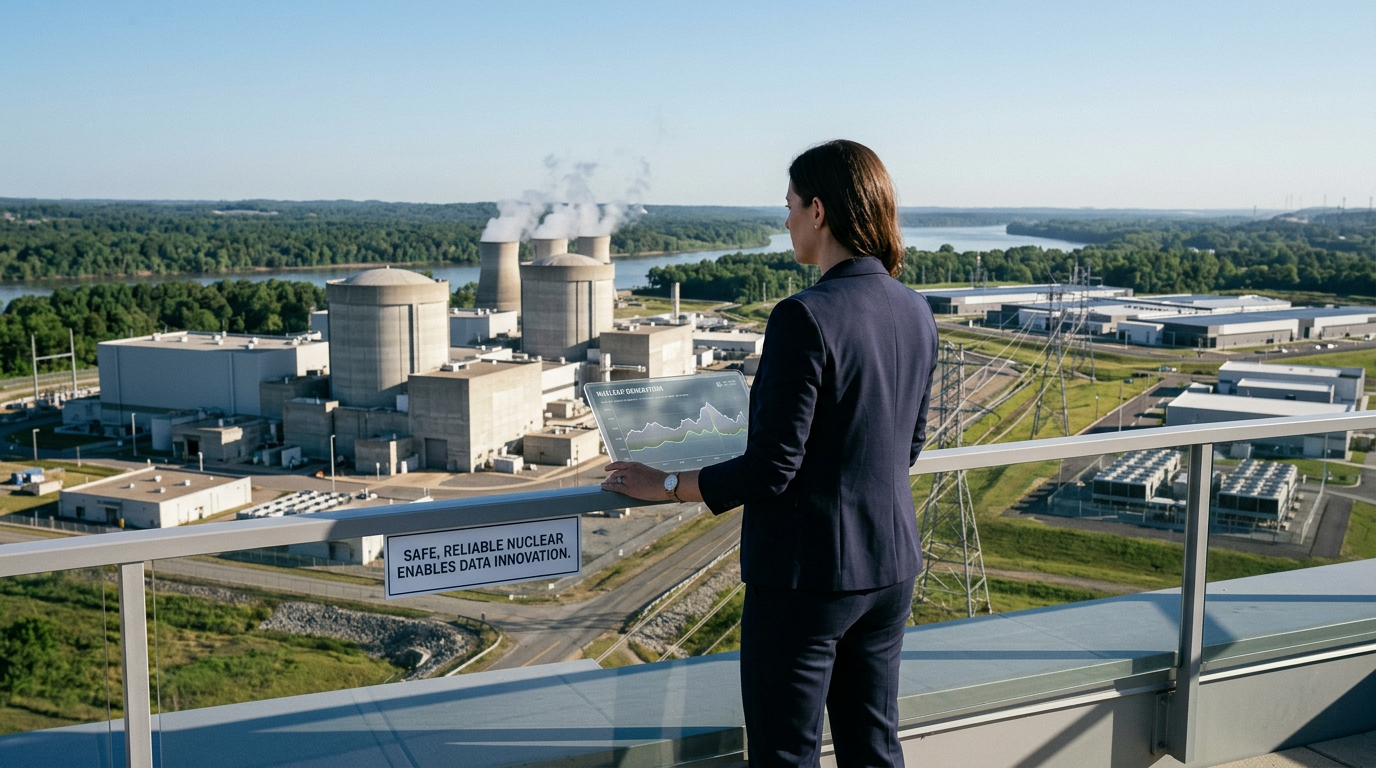
The Federal Energy Regulatory Commission projects U.S. data center electricity demand will climb to 35 gigawatts by 2030, up from 17 gigawatts in 2022. That’s roughly a doubling in less than a decade.
Nuclear is one energy source that can realistically help meet that kind of demand: it runs 24 hours a day, produces no direct carbon emissions at the point of generation, and isn’t disrupted by weather.
Constellation sits at the center of all of this.
The Business Behind the Selloff
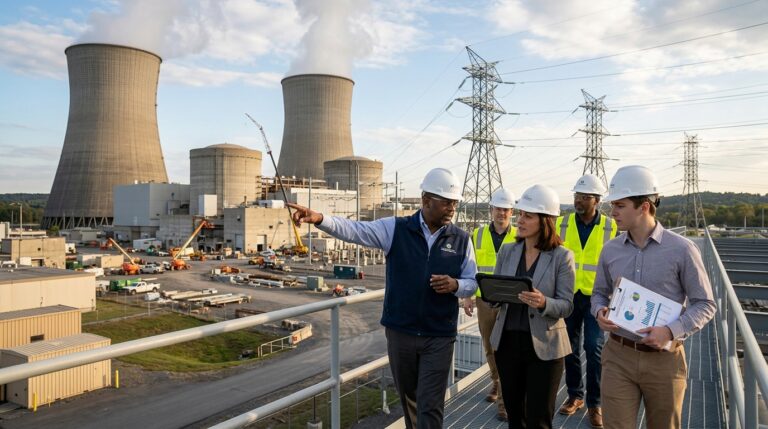
Constellation owns and operates 21 nuclear reactors – the largest commercial nuclear fleet in the United States. It’s not a startup or a speculative bet. It’s the incumbent.
Q1 2026 revenue came in at $11.12 billion, beating consensus estimates by roughly 24%. The company is signing long-term nuclear power purchase agreements directly with major buyers: Meta has locked in a 20-year contract tied to the Clinton Clean Energy Center in Illinois. Walmart recently signed on too, a long-term deal for emissions-free electricity from Constellation’s Dresden Clean Energy Center in Illinois.
At the same time, policy support for nuclear has intensified. In May 2025, President Trump issued four executive orders aimed at reviving and expanding U.S. nuclear capacity.
The stock’s decline from $412 to roughly the high-$250s has more to do with shifting market sentiment than anything visibly broken in the core nuclear franchise.
Where the Stock Stands
Current price is roughly $258. The average 12-month analyst target across 23 Wall Street analysts is $357.81, implying meaningful upside. Morgan Stanley has an Overweight rating with a $364 target. Wells Fargo is also positive, with a $516 target while maintaining a Buy rating.
The forward P/E is around 22.
Risks are worth understanding. Long-term debt rose meaningfully following the Calpine acquisition. Capital expenditure requirements are significant and ongoing. Nuclear fleet capacity factors can fluctuate. And regulatory policy, while currently supportive, could shift.
But here’s what’s hard to ignore. The companies writing the biggest AI infrastructure checks in history need power that only a handful of operators can actually provide around the clock. Constellation is the largest of those operators in the U.S., sitting about 38% below its 2025 high while its contracts pile up and its earnings beat estimates.
The AI power trade has a lot of names. This one may be the one the crowd hasn’t fully repriced yet.