Start with the power problem.
AI and associated data center infrastructure are driving historically unprecedented electricity demand growth — total global demand is expected to increase by more than 7,600 TWh between 2023 and 2030. Utilities can’t build gas plants fast enough. Solar and wind can’t deliver the always-on baseload that AI inference requires. So the conversation landed, inevitably, on nuclear. That part most people already know. It’s the next step — and the step after that — where the real opportunity hides.
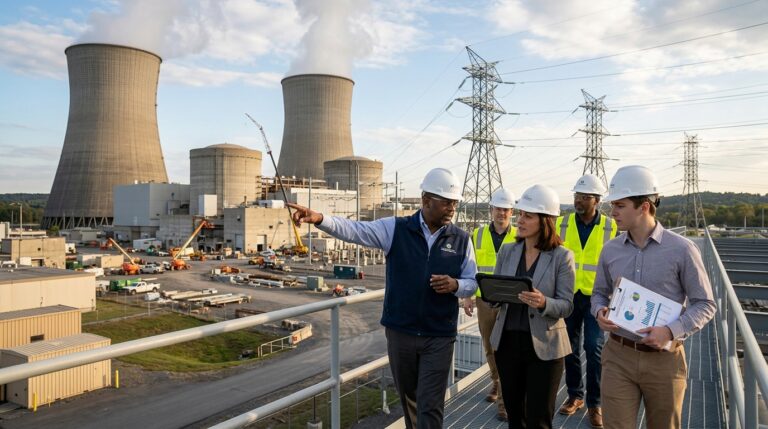
Nuclear resurgence is real. The policy commitment is real. The U.S. has a target of adding 300 gigawatts of reactor capacity by 2050. Amazon has made a 5-gigawatt SMR deployment commitment. Tech companies are signing offtake agreements for reactors that don’t exist yet. X-energy just went public. Oklo is publicly traded. TerraPower is breaking ground. The excitement is genuine.
But here’s what nobody is talking about loudly enough: most of these reactors can’t run on the fuel that currently exists.
The Fuel Problem Nobody Is Pricing
Conventional nuclear reactors run on low-enriched uranium — uranium enriched to between 3% and 5% U-235. That’s the standard stuff. There’s a supply chain for it, imperfect but functional.
The next generation of reactors is different. HALEU — High-Assay Low-Enriched Uranium — is uranium enriched to between 5% and 20% U-235. Most advanced reactor designs require it, including TerraPower’s Natrium, X-energy’s Xe-100, Oklo’s Aurora, Kairos’s Hermes, and Radiant’s Kaleidos.
The physics are demanding. HALEU represents the most significant system-level constraint on advanced reactor deployment. HALEU-fueled SMRs require 5 to 7 times the separative work unit capacity per unit of energy compared to conventional light water reactor fuel. That’s not a small engineering problem. That’s a structural shortage embedded inside the energy transition’s most celebrated solution.
And the supply situation is bleak. At present, only Russia and China have the infrastructure to produce HALEU at scale. The U.S. banned Russian enriched uranium imports in 2024. Before that ban, Russia’s Rosatom controlled approximately 44% of global enrichment capacity and supplied nearly 25% of the enriched uranium used by U.S. utilities. That supply is now off the table through 2040.
So the question becomes: who fills that void?
One Facility. One Company. Piketon, Ohio.
This is where the story gets narrow in a way Wall Street hasn’t fully processed yet.
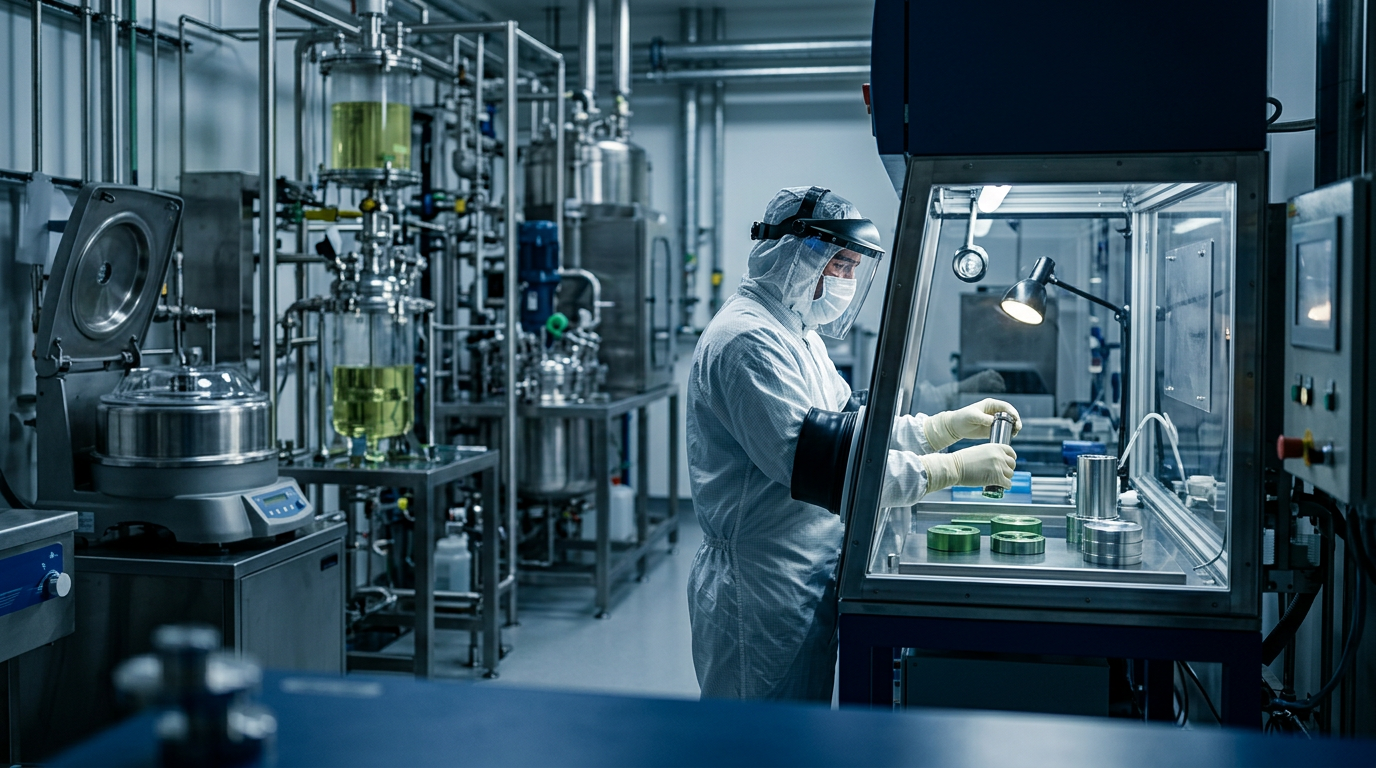
Centrus Energy is the only U.S. HALEU producer, operating a 16-centrifuge demonstration cascade that has produced roughly 900 kilograms per year — far below the multi-ton demand from planned advanced reactors. That’s not a competitive landscape. That’s a structural monopoly on a fuel that every next-generation reactor in America needs.
On July 1, 2026, Centrus made it official. Centrus subsidiary American Centrifuge Operating signed a $900 million fixed-price contract with the U.S. Department of Energy to establish new commercial HALEU enrichment capacity at its Piketon, Ohio facility, with DOE options for up to an additional 10 metric tons bringing potential total contract value to approximately $1.07 billion.
And they finished ahead of schedule. Centrus completed production of the final 900 kilograms of HALEU under its prior demonstration contract, achieving more than 1,900 kilograms cumulatively, and finishing ahead of schedule. That operational detail matters. In nuclear, hitting timelines is rare. Beating them is a signal.
The backlog is building fast. Centrus recently signed a Letter of Intent to supply enough domestic HALEU to power up to five Oklo Aurora powerhouses for multiple years, with deliveries scheduled to begin in 2029, from its American Centrifuge Plant in Pike County, Ohio — bringing together domestic fuel supply, advanced nuclear power generation, and project execution in a region where access to domestically sourced HALEU remains one of the central constraints facing the sector.
The Backlog Nobody Is Fully Modeling
Slight tangent, but it matters: the enrichment bottleneck isn’t just about HALEU. It runs deeper into the conventional fuel cycle too.
Analysis found that the U.S. faces a dramatic shortage in enrichment capacity, with current domestic capacity only sufficient to cover 10% to 25% of projected annual needs in 2050. That’s the conventional fuel picture. Add HALEU demand from advanced reactors on top of that and the math becomes extreme. To operate 250 to 490 gigawatts of nuclear capacity by 2050, the U.S. will require total geopolitically secure enrichment services five- to tenfold greater than near-term available domestic capacity.
Centrus is sitting at the center of that gap.
The company now expects full-year 2026 revenue in the range of $450 million to $500 million, and it has cited a $3.9 billion order backlog through 2040 alongside ongoing expansion at its Piketon facility. That backlog is long-dated, government-backed, and structurally protected by the Russian import ban that runs through 2040.
The first new large-scale capacity is expected to come online by 2029. In the interim, Centrus intends to privately operate the existing HALEU cascade on a commercial basis to begin supplying near-term customer needs.
What Wall Street Is Missing
The coverage on Centrus is mostly focused on valuation concerns — the stock trades at a stretched multiple and has come down significantly from its 52-week high of $464. As of July 10, 2026, LEU traded between $170.20 and $177.32 intraday. The bears look at a P/E ratio above 57x and see a problem. That framing misses the structural picture.
What this company actually is: a government-contracted, legally protected, physically irreplaceable link in a supply chain that every advanced nuclear deployment in America depends on. The contracts are structured as indefinite-delivery, indefinite-quantity agreements, meaning the government serves as a guaranteed buyer to de-risk the massive capital investments required. The Russian ban creates the demand floor. The 2029 production ramp creates the revenue step-change. The $3.9 billion backlog provides visibility that almost no company in the energy sector can match.
There are real risks. The biggest near-term swing factor is execution on enrichment expansion, while the key risk is that government awards or utility contracts arrive more slowly than expected. The Piketon expansion is capital-intensive and technically complex. And the stock has been volatile — down roughly 63% from its peak.
But the bear case rests on execution risk, not on the underlying demand structure. The demand structure is arguably the most locked-in in American energy: a legal ban on foreign supply, a growing fleet of reactors that require a fuel only one U.S. company produces, and a government writing billion-dollar checks to ensure that company stays operational.
The Deeper Chain
Think about what has to happen for this story to unfold:
- AI demand pushes utilities to nuclear for baseload power
- Utilities commit to SMRs for faster deployment and smaller footprint
- HALEU is the single biggest bottleneck in the advanced reactor deployment timeline — without it, none of the most promising next-generation SMRs can fuel their first cores
- Russia is banned. China is not an option. Western enrichment capacity is near maximum.
- One U.S. company holds the production contract, the physical cascade, and the government relationship
That’s four layers deep from the AI spending headline. CNBC isn’t leading with it. Bloomberg isn’t modeling the enrichment bottleneck in its SMR coverage. The conversation is entirely focused on the reactor companies — Oklo, X-energy, TerraPower — and almost none of it reaches the fuel layer underneath them.
What to Watch
The near-term catalyst calendar is clear. Centrus is planning initial build-out of 12 metric tons of annual HALEU capacity alongside LEU output, serving a $2.4 billion LEU backlog. The pace of that ramp, and the signing of additional commercial HALEU contracts beyond the Oklo letter of intent, will be the key signals to track. Each new SMR company that advances toward construction permitting is another demand unit appearing on Centrus’s future order book.
As of early July 2026, 10 analysts covering LEU carry a consensus Buy rating. Price targets vary widely — from $195 at the cautious end to $295 at the bull end — which itself reflects how difficult the market finds it to model a company with this kind of asymmetric structure.
The real question isn’t whether the nuclear buildout happens. It’s whether the fuel to run it exists on time. Right now, the answer is: barely, and only in one place.
For informational purposes only.