Most people look at Steel Dynamics and see a steel company. That framing is going to cost them.
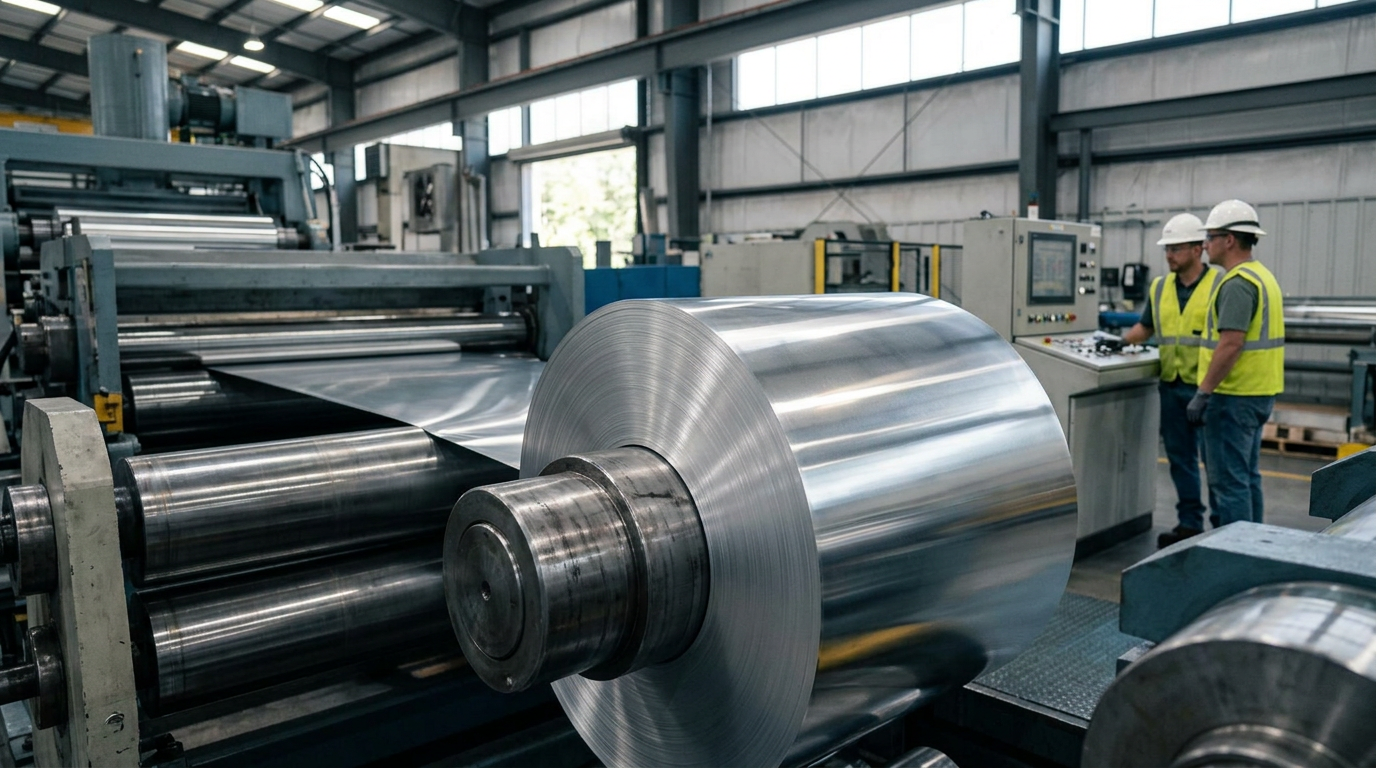
Here’s what’s actually happening. STLD has been quietly building an entirely new business line — aluminum flat-rolled products — inside a company that Wall Street still prices as a cyclical steel producer. And the gap between what analysts are modeling and what’s coming out of the Mississippi mill is getting harder to ignore.
Start with the supply picture. Management has pointed to a domestic aluminum sheet supply deficit of more than 1.4 million tons that’s projected to grow as demand accelerates. Tariffs on imported aluminum are keeping foreign supply out. And Steel Dynamics is one of the few domestic producers positioned to fill that hole with high recycled-content flat-rolled product.
The ramp itself has been messy — startup issues in January forced a temporary pause and some inventory write-offs — but the company’s own guidance says Q2 aluminum earnings will improve significantly versus Q1, with shipments already up 54% sequentially just in the first quarter alone.
Slight tangent, but it matters: the end markets here aren’t commodity steel markets. Beverage can and packaging demand is counter-cyclical. Automotive and industrial buyers are actively seeking domestic supply alternatives. That mix profile is structurally different from anything STLD’s historical earnings have reflected.
Now look at the numbers coming through the base business while the aluminum segment is still in startup mode. Q1 2026 operating income from steel operations hit $557 million — 73% higher than Q4 on a sequential basis. Record shipments. Metal spread expansion. The order backlog is nearly 40% higher than a year ago and extends through 2027, supported by data center construction, commercial builds, onshoring, and infrastructure programs.
Q2 EPS guidance came in at $3.51 to $3.55 per diluted share, versus $2.01 in the same quarter last year. The company has $2.0 billion in liquidity. It repurchased $170 million in stock during Q2 alone. Free cash flow yields are projected around 9% on 2026 estimates — above peer averages.
What the market is missing is the EBITDA trajectory once aluminum reaches scale. Analysts project EBITDA growing from roughly $2.3 billion in 2025 to over $3.1 billion in 2026. That’s a $900 million step-up. And it includes an aluminum segment still losing money while the mill commissions.
When the aluminum operations flip from drag to contributor — which Q2 guidance suggests is already beginning — the earnings power of this company looks materially different from what a 15x forward multiple implies.
The risks are real. Steel is cyclical. A demand slowdown hits margins fast. The aluminum ramp has already had one false start. And the decision to relocate the planned second satellite slab center from Arizona to Mississippi after disputes with state officials added a $16 million write-down to Q2 results.
But here’s where I’m at. This is a company with a proven execution record in minimill steel, now applying the same cost-efficient model to a market with a structural domestic supply shortage. The backlog is extended. The margins are expanding. The aluminum segment is ramping from zero. And the stock is trading at a forward P/E around 15x — a multiple that doesn’t reflect any optionality from the new business.
It may not be a story Wall Street is chasing right now. But the Q2 earnings report — due next month — is where the aluminum inflection starts to show up in the numbers in a way that’s hard to explain away.
Worth a closer look before that happens.