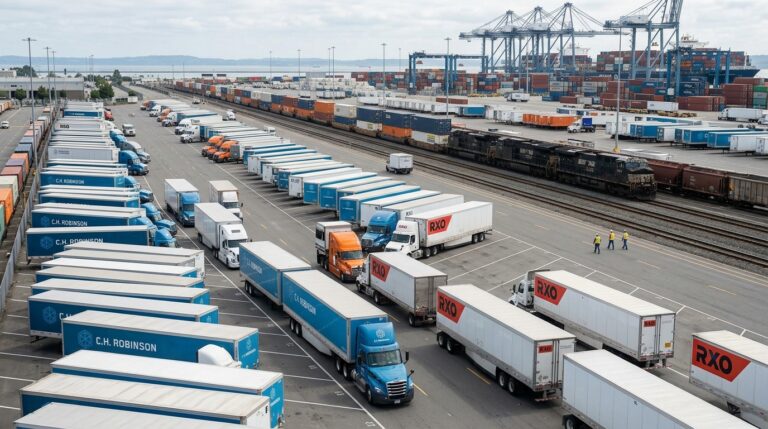

While Wall Street was busy pricing earnings revisions and Fed pivot timelines, something structural was happening in Southeast Asia. It did not make many headlines. It rarely does.
The region absorbed $226 billion in foreign direct investment in 2024 — an 8% increase over the prior year — while global FDI fell by 11%. That is not a small divergence. That is a structural capital reallocation playing out in real time, driven by tariff reshuffling, geopolitical hedging, and a supply chain rethink that is now years into execution.
Indonesia’s economy expanded 5.61% in Q1 2026, its fastest growth in more than three years. Vietnam grew 7.83% year on year in the same quarter. Capital flows into the region remained broadly resilient, anchored by technology and manufacturing commitments, even as the Middle East conflict introduced headwinds. These are not emerging market lottery tickets. These are economies with expanding industrial infrastructure, trade framework coverage under RCEP and CPTPP, and governments actively competing for investment through tax incentives and streamlined licensing.
And yet most Western institutional portfolios still treat the region as an afterthought.
What the Capital Flow Data Actually Shows
The FDI data tells a clear story. ASEAN has received more than $200 billion in annual FDI since 2021, significantly higher than the pre-pandemic average of roughly $130 billion. Vietnam and Indonesia are the standouts. Vietnam, which has expanded into electronics assembly and consumer goods manufacturing, received approximately $20 billion in FDI in 2024. Indonesia, which is actively positioning itself in battery materials and EV-related industries, absorbed roughly $24 billion.
Singapore remains the regional financial hub with $143 billion in FDI inflows, much of it multinational headquarters and financial services rather than manufacturing. But the manufacturing story is in Vietnam, Malaysia, and Indonesia — and it is accelerating, not decelerating.
The China+1 dynamic is the primary driver. U.S. firms and multinationals are expanding operations in countries such as Vietnam, Thailand, and Indonesia to manage tariff exposure and reduce concentration risk. This is not low-cost labor arbitrage anymore. Investment is moving into electronics, semiconductors, and specialized manufacturing, particularly in Vietnam and Malaysia, where supply chain capabilities are maturing into higher-value components — semiconductor packaging and testing, precision manufacturing, battery materials.
The Trade Architecture Nobody Is Fully Modeling
Here is the part that does not fit neatly into a single country thesis. ASEAN’s advantage in 2026 is not just any individual country — it is the multi-country supply chain. Components may be produced in Malaysia, assembled in Vietnam, and shipped through Thai logistics hubs. RCEP reduces tariff friction across the cross-border flow. CPTPP does the same. Firms are distributing production across several ASEAN countries, building redundancy into supply networks that previously did not exist.
That network structure matters for investors because it means the regional FDI story is durable, not contingent on a single election or bilateral negotiation. Even if U.S.-Vietnam tariff dynamics shift, the regional integration that has been built over the past four years does not evaporate. The infrastructure, the factory clusters, the logistics corridors — those are sticky. They represent sunk cost in the best sense.
The capital flow theme is also moving up the value chain. Three structural shifts defined H1 2026 in emerging market capital flows: trade fragmentation redirecting investment toward ASEAN and Mexico, a real assets rotation shaped by AI demand and power constraints, and geopolitical risk functioning as a permanent pricing variable. Power availability and grid capacity are the primary bottlenecks, but they are bottlenecks being actively addressed. Data center investment in Thailand, Malaysia, and Indonesia is accelerating, with announced greenfield project values exceeding $270 billion globally in 2025, a meaningful portion of which is pointed at Southeast Asia.
The Equity Market Lag
Here is the disconnect. The FDI data reflects real, committed capital. The equity market reaction in ASEAN has been considerably more muted. Emerging market equity flows tightened considerably through the first half of 2026 as the Iran conflict drove risk-off positioning and U.S. dollar strength. Capital Economics noted that EM outflows began easing only in the past few weeks, coinciding with the U.S.-Iran ceasefire agreement and Hormuz reopening.
That creates an asymmetric situation. The structural story — supply chain rerouting, manufacturing investment, digital infrastructure buildout — is intact and compounding. The portfolio flows that would normally track that story got interrupted by a geopolitical shock that is now partially resolving. The gap between what the FDI data shows and what equity allocations reflect is unusually wide.
BlackRock’s June 2026 commentary noted that the U.S. Dollar Index is at a one-year high after the Federal Reserve stoked expectations for a rate increase — but added that selectivity in EM is key. The dollar strength that has weighed on EM currencies and suppressed portfolio flows is a rate-driven phenomenon, not a structural change in the investment thesis. When the Fed’s rate path becomes less hawkish — whether through a data shift or a policy pivot — the dollar headwind reverses, and EM capital flows typically follow.
Stocks and Sectors Most Directly Affected
The primary beneficiaries of ASEAN’s manufacturing ascent fall into a few categories. Contract electronics manufacturers with Vietnam or Indonesia exposure are the most direct play. Supply chain logistics companies operating regional networks benefit from the multi-country model. Industrial REIT equivalents and industrial park developers in the region are seeing sustained greenfield investment demand. Semiconductor packaging and testing companies with Malaysian and Vietnamese operations are moving up the value chain in ways that U.S.-listed proxies do not fully capture.
On the U.S. equity side, companies that have disclosed significant Vietnam or Indonesia manufacturing diversification — including Apple supply chain partners, consumer electronics assemblers, and industrial component manufacturers — deserve fresh valuation attention. The tariff exposure they were managing three years ago is now a structural cost advantage relative to China-dependent peers.
Vietnam’s government is targeting 10% GDP growth for 2026. It will likely fall short given energy price headwinds and external demand softness. But even a 7.5% to 8% outcome is a growth rate that very few markets in the world can match, coming from a base of compounding manufacturing investment.
Three Scenarios
Bull Case: U.S.-Iran ceasefire holds, oil prices remain below $75, and the dollar begins to weaken as Fed rate hike expectations fade. EM capital flows reverse sharply into ASEAN equities, particularly Vietnam and Indonesia-listed instruments and ETFs with regional exposure. The supply chain rerouting narrative gains mainstream momentum as Q3 2026 earnings season produces visible margin benefits for companies that have diversified manufacturing. Frontier market ETFs with ASEAN concentration see meaningful inflow acceleration.
Base Case: ASEAN continues to attract FDI at elevated levels, but portfolio equity flows remain modest as U.S. dollar strength and elevated domestic interest rates keep the risk-return calculus mildly unfavorable for EM. Regional growth continues, and the structural story compresses over 12 to 18 months into higher equity valuations — but not in a single sharp move. MSCI EM maintains modest outperformance versus S&P 500 for the second half of 2026.
Bear Case: Iran ceasefire fractures, Hormuz disruptions resume, and energy costs spike again. ASEAN export-driven economies face renewed pressure as global trade volumes contract. Regional currencies weaken further against a strengthened dollar. The FDI story slows as multinational capex decisions get delayed in an uncertain geopolitical environment. Manufacturing investment in Vietnam and Indonesia decelerates, and equity valuations in the region give back recent gains.
Active Trader Strategy Framework
The highest-probability positioning framework is a two-part trade: structural long on ASEAN manufacturing exposure through ETFs with direct Vietnam and Indonesia weighting, paired with a dollar-sensitivity hedge that pays if the Fed turns less hawkish in H2 2026.
For traders with single-stock access, the earnings calendar for U.S. companies with significant Vietnam and Indonesia supply chain concentration is the near-term event driver. If those companies report margin recovery tied to manufacturing diversification, the theme gets institutional validation on a broad scale.
For options traders, the FXI-to-ASEAN divergence trade is worth examining. Chinese equity weakness has suppressed the entire EM complex in flows data, even though the ASEAN structural story is fundamentally independent of China’s economy. A spread trade that is long ASEAN-focused ETFs and short Chinese-heavy EM baskets reflects that divergence without requiring a single macro call on the dollar or the Fed.
The capital reallocation away from concentrated China exposure has been underway for four years. ASEAN has been absorbing it quietly. The equity markets are still catching up to the FDI data.
That gap is the trade.
For informational and educational purposes only. Not investment advice. Trading involves risk, including loss of principal.