Something shifted on June 17. Not in a gradual, priced-in-over-weeks kind of way. All at once.
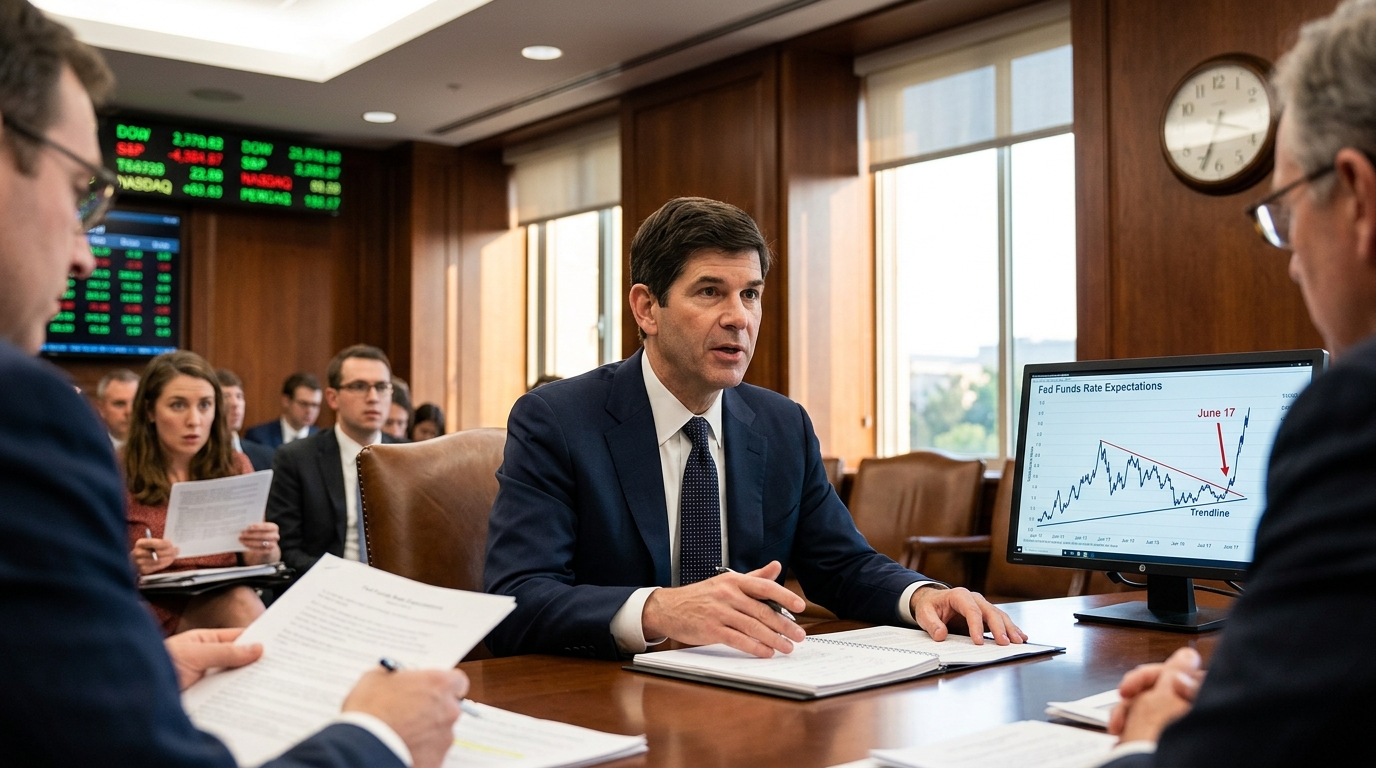
Kevin Warsh walked into his first Federal Reserve press conference as chair and delivered a message that markets had been quietly bracing for but not fully pricing: the easing cycle is done, rate hikes are now on the table, and the Fed is done with hand-holding. The FOMC held its benchmark overnight borrowing rate in a range of 3.5%–3.75% — but that wasn’t the story. The story was what came next in the dot plot.
Nine officials on the rate-setting committee signaled they supported higher rates this year, with six of those supporting two quarter-point increases. That’s a sharp flip. In March, not a single policymaker penciled in a hike, and the committee as a whole had forecast one cut in 2026.
The reversal isn’t hard to trace. Since the Iran war started in late February, inflation has flared amid higher oil and gas prices, pushing the Consumer Price Index to an annual rate of 4.2% in May — the highest since April 2023.
The market reaction told the story cleanly. Two-year Treasury yields jumped 16 basis points to 4.21%, hitting their highest level in over a year. The U.S. dollar index rose about 1% and was set for its best day in almost a year, reflecting expectations for higher-for-longer rates.
This Is Not Just About the Dot Plot
What Warsh actually did was bigger than any single projection. He shortened the Fed statement, removed forward guidance, and announced the formation of five task forces to explore potential policy and process reforms. This is a regime change in how the Fed communicates — not just what it does.
Warsh has long questioned the dot plot as a communication tool, and he signaled before taking the role that he wants a leaner Fed — one that offers less forward guidance than markets grew accustomed to under Jerome Powell. He followed through by not even submitting his own dot.
That’s the part Wall Street is still processing. Most Wall Street analysts, including economists at Goldman Sachs and Bank of America, expected him to withhold his dot entirely, making him the first Fed chair in 14 years not to participate in the SEP. A chair who won’t commit to a number is telling markets not to expect the same clarity they relied on for years. That changes how every future data point gets interpreted.
The BofA Call That Matters
Bank of America changed its forecast and predicted the Fed will raise rates by a quarter point three times this year, lifting the benchmark rate to 4.25%–4.5% from the current 3.5%–3.75% range. That’s three hikes. From a bank that had previously called for rates to stay flat all year.
The futures market is closer to one or two. As of the evening of June 17, the market was pricing more than a 70% chance of a hike by the October meeting and more than 100% chance by the December meeting.
Either way, the direction changed. And that changes a lot of things.
What It Means for the Market Right Now
Short duration bonds become more interesting. Floating rate exposure gets squeezed — particularly for companies with heavy debt loads. Financial tightening due to persistently high interest rates and heightened bank risk controls can weigh on growth. The rapid rise in private credit markets and associated products could cause broader financial-system stress.
Guggenheim expects the Federal Reserve to hold its policy rate at the current target range of 3.50–3.75% through mid-2027. Fed communication has shifted in recent months toward a more neutral policy outlook. With the labor market stabilizing and inflation running above target, the Fed has little reason to reduce rates in the near term.
Slight tangent, but it matters: an estimate by the U.S. Congress Joint Economic Committee found that tariffs and the war with Iran cost each household more than $3,100 from 2025 through May of 2026. That’s a real drag on demand that the Fed is trying to work around while simultaneously fighting energy-driven inflation. They don’t have a clean tool for that.
The next FOMC meeting is July 28–29. Between now and then, every inflation reading, every payroll number, every Warsh speech lands differently. That’s not a warning. It’s the trade.
For informational purposes only.